Nail Salon Advertising: A Guide to Facebook and Google Ads
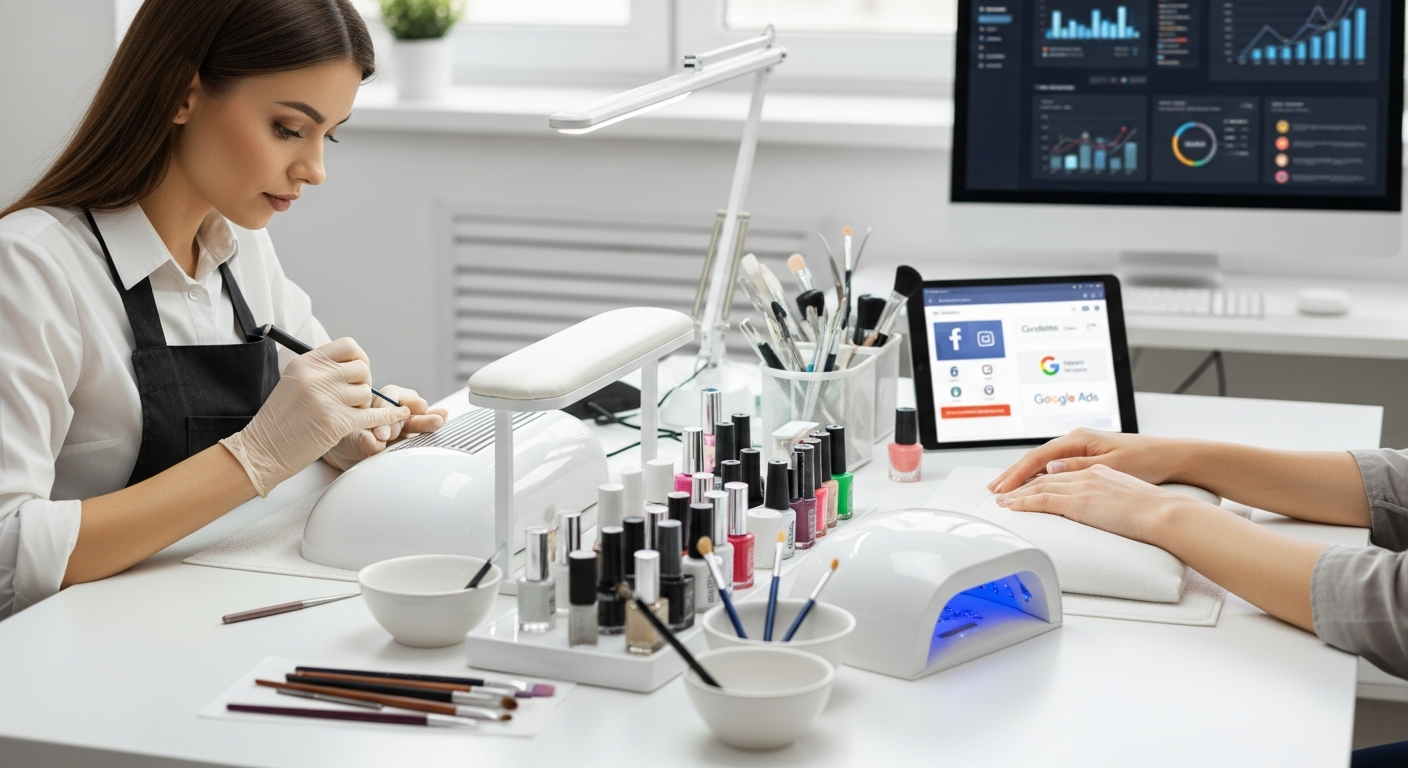
Nail salon advertising involves using paid digital platforms like Facebook and Google Ads to attract new local clients. Effective campaigns focus on targeted lead generation by showcasing services to nearby customers, setting realistic daily budgets, and calculating the cost to acquire each new client to ensure long-term profitability and sustainable business growth.
Understanding Paid Ads for Your Nail Salon
Paid advertising allows salon owners to skip the wait for organic reach and put their services directly in front of potential clients. This is a commercial investment where you pay to play in the local market.
Unlike social media posts that only reach your followers, paid ads target people who do not know your business yet. This approach is essential for filling empty chairs during slow weekdays or launching a new location.
Success requires a clear understanding of your local competition and your specific service margins. You must treat every dollar spent as a tool to buy a new appointment rather than just “likes” or “shares.”
Choosing Between Facebook and Google Ads
Most nail salons benefit from a combination of Facebook and Google, but they serve different purposes. Choosing the right one depends on whether you want to create demand or capture existing demand.
Facebook Ads for Visual Discovery
Facebook and Instagram are visual platforms perfect for showing off high-quality photos of manicures and pedicures. These ads work by interrupting a user’s scroll with an attractive offer or a beautiful image.
You can target specific demographics, such as women aged 25-55 living within five miles of your salon. This is ideal for building brand awareness and enticing people who weren’t actively looking for a nail appointment.
However, Facebook leads can sometimes be “cold,” meaning the person might click because they like the photo but aren’t ready to book immediately. Consistent follow-up is necessary to convert these leads.
Google Ads for Immediate Intent
Google Ads target people actively searching for keywords like “nail salon near me” or “best pedicure in [City].” These users have high intent and are usually looking to book an appointment right now.
Because these users are actively looking for a service, Google Ads often result in faster bookings. The competition for these keywords can be high, which may increase the cost per click compared to Facebook.
Google is most effective when your website is professional and your Google Business Profile has strong reviews. If your online reputation is poor, Google Ads will struggle to convert searchers into customers.
Setting a Realistic Advertising Budget
Advertising is not a one-time expense but a recurring cost of doing business. Small to mid-size salons should start with a budget they can afford to lose while the data accumulates.
A common starting point for a single-location salon is $500 to $1,500 per month. This allows the platform’s algorithm enough data to learn which local users are most likely to click and book.
Avoid “boosting” posts with small amounts like $5 or $10. This rarely provides enough data to see a real return. Instead, commit to a daily spend of at least $20 to $30 to see meaningful results.
Calculating Your Customer Acquisition Cost (CAC)
The Customer Acquisition Cost (CAC) is the total amount you spend on ads divided by the number of new clients who actually walk through your door. This is the most important metric for your salon.
If you spend $500 and get 25 new clients, your CAC is $20 per client. If your average service price is $60, you have made a profit on the first visit. If your CAC is higher than your service price, you are losing money.
The goal of advertising is to acquire a client at a cost that is lower than their “Lifetime Value.” A client who costs $20 to acquire but visits once a month for a year is a massive win for your business.
Managing Risks and Realistic Expectations
Paid advertising is not a magic fix for a struggling business. If your salon has poor customer service or low-quality work, ads will only help more people discover those flaws faster.
There are no guarantees in digital advertising. Markets change, and some months will perform better than others. Factors like seasonal demand, local events, and even the weather can impact your ad performance.
Be prepared for a learning phase. Most campaigns take 30 to 60 days of consistent spending before the “sweet spot” is found. Patience and data-driven adjustments are required to achieve a stable flow of new leads.
-
Key Takeaways:
- Facebook is for visual discovery; Google is for active searchers.
- Start with a budget you can sustain for at least three months.
- Focus on your Customer Acquisition Cost, not just vanity metrics.
- Ensure your salon operations are ready to handle new leads professionally.