Nail Salon Advertising: Facebook and Google Ads Guide
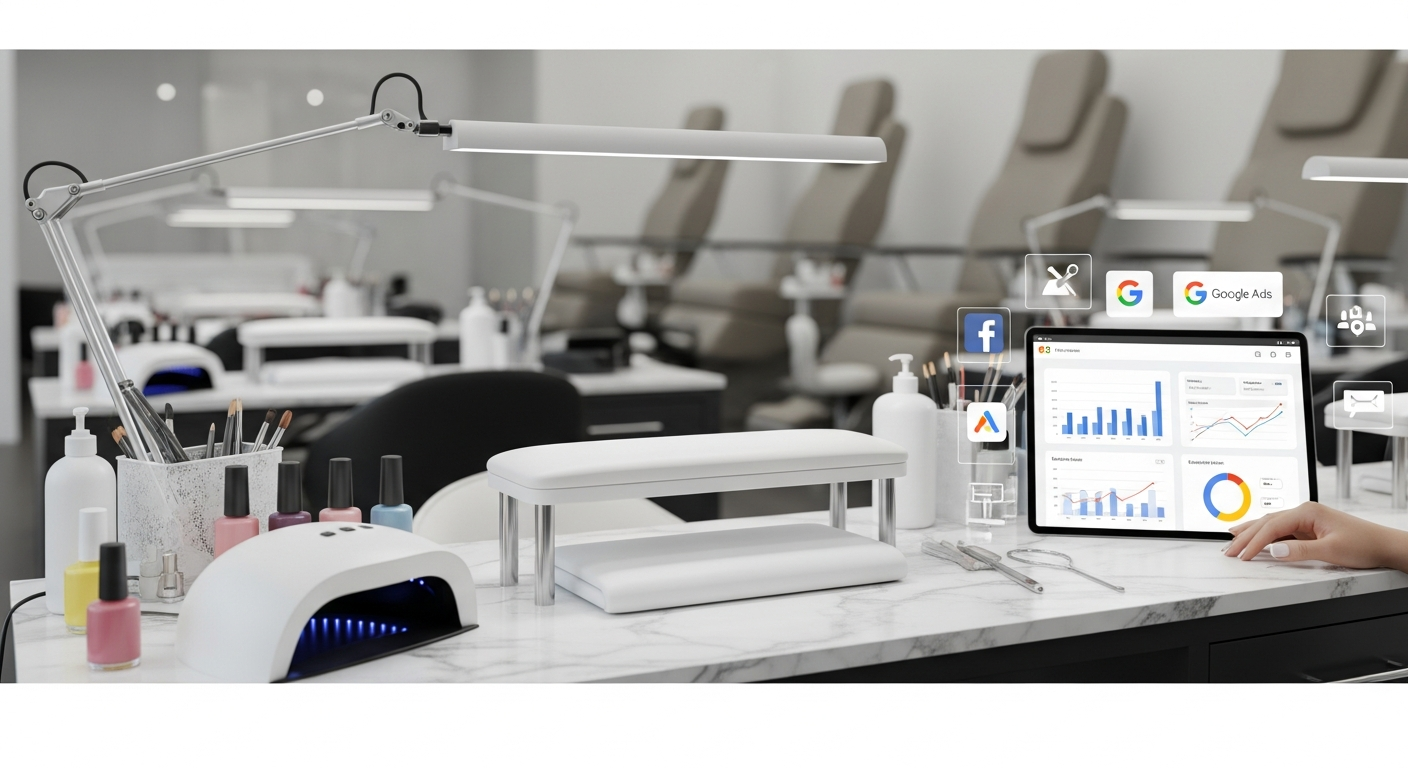
Nail salon advertising involves using paid digital channels like Facebook and Google Ads to acquire new local clients. Success depends on targeting specific geographic areas, managing daily budgets, and monitoring lead generation costs. This strategy helps salon owners increase appointment bookings by appearing where potential customers are actively searching or browsing.
Reaching Local Clients via Facebook Ads
Facebook is a visual platform that allows salons to showcase their work directly to women in their immediate zip codes. You can target users based on their location and interests in beauty or self-care.
Effective ads usually feature high-quality photos of manicures or current salon promotions. These ads appear in the newsfeeds of people who may not be looking for a salon but are influenced by visual quality.
The goal of these ads is lead generation, which involves collecting a name and phone number in exchange for a first-time client discount. This creates a list of potential customers for your staff to contact.
Capturing Search Intent with Google Ads
Google Ads works differently by targeting people who are actively searching for services like “manicure near me” or “best nail salon.” This is called high-intent advertising.
When someone searches for a local service, your salon can appear at the top of the search results. You only pay when someone clicks on your ad to visit your website or call your shop.
This method is highly effective for filling immediate openings because the user is already looking to book an appointment. It requires a clear website and a functional “Book Now” button to succeed.
Managing Lead Generation Basics
Lead generation is the process of turning a stranger into a contactable prospect. In the nail industry, this usually happens through an online form or a direct phone call.
To succeed, your salon must have a system to follow up with these leads quickly. If a potential client submits their info but does not hear back for days, the advertising money is wasted.
Tracking how many leads turn into actual paid appointments is the only way to measure if your nail salon advertising is profitable. Simple spreadsheets are often enough for small salons to track this.
Setting a Realistic Advertising Budget
Advertising is a business expense that requires consistent investment to see data-driven results. Most small salons start with a modest daily budget to test which images or headlines perform best.
A common starting point for a single location is $10 to $30 per day per platform. This allows the ad algorithms enough data to find people likely to book an appointment.
Expect to run ads for at least thirty days before making major changes. Constant pausing or changing of budgets prevents the platforms from optimizing your reach to local customers.
Understanding Customer Acquisition Cost
Customer Acquisition Cost, or CAC, is the total amount of ad spend divided by the number of new clients who actually walked through your door.
If you spend $500 on ads and get 20 new clients, your CAC is $25. This number helps you decide if your marketing is sustainable compared to the price of a manicure.
The goal is to ensure the lifetime value of a client is higher than the cost to acquire them. A client who returns every three weeks is worth much more than the initial acquisition cost.
Risks and Outcomes in Paid Advertising
Paid advertising is not a magic fix and carries the risk of financial loss. If your salon has poor reviews or a difficult booking process, ads will not perform well.
Market saturation also impacts costs; if many salons in your city are bidding for the same keywords, the price per click will increase. This can make profit margins very thin.
Success requires a combination of good ad creative, a fair budget, and excellent in-salon service. Ads get people through the door, but your technicians keep them coming back.